
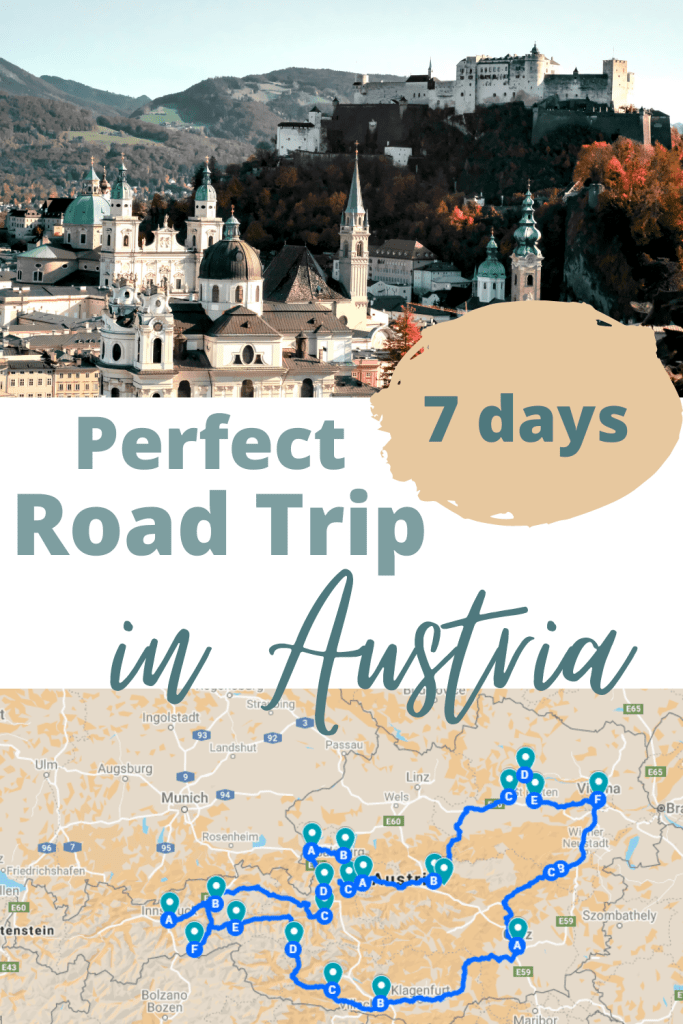
Is Austria in your bucket list destination? Are you a fan of road trips? Would you like to explore this country in a lot of detail? In this blog post, I’ll show you an amazing seven days circular itinerary around Austria for an unforgettable trip. To make this trip even more smooth you can’t forget some accessories such as this 20000mAh Power bank or this Thermic Water bottle.
Austria is a small country located in the Alpine mountains in the centre of Europe. Actually, more than 60% of the country is covered by these mountains, which makes it a picturesque country. These mountains also provide numerous paths that can be explored by hiking. Make sure you have comfortable footware such as these hiking shoes and hiking socks.

Contents
Considerations
How to get there?
Day 1 – Vienna to Graz
Day 2 – Full day in Graz
Day 3 – Graz to Innsbruck
Day 4 – Full day in Innsbruck
Day 5 – Innsbruck to Salzburg
Day 6 – Salzburg to Halstatt
Day 7 – Halstatt to Vienna
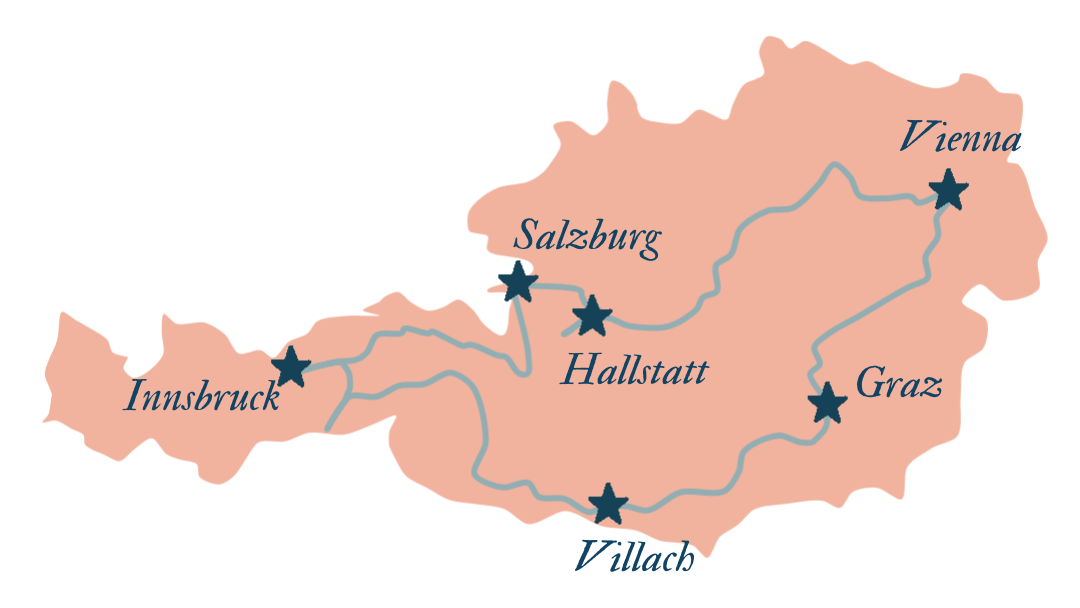
Considerations
It is important to consider that the highways in Austria are not free and that you can buy a vignette in the Austrian gas stations, post offices and tobacco shops. Nowadays, there is also a digital vignette that may be more convenient. These vignettes have several durations (each with its price, starting at 9.50€), starting from 10 days and ending in one year. You should ask the rental agency if the car has the vignette or if you’ll have to buy it yourself. This sticker will guarantee you the right to travel on the country’s highways without paying any heavy fines. Also, be sure to keep the receipt (even after you return your rental). This should be done because, in the case of a mistaken fine, the receipt may be used to prove that you purchased the vignette.
How to get there?
The easier way to get to Austria is generally through an aeroplane (unless you are from a close-by country where you may prefer to use a train as well). Vienna International airport is located 18 km away from the city. In this airport, you can rent your car to start your road trip adventure. If you don’t want to start driving yet, you can use the City Airport Train. This train will get you to the Wien Mitte train station in 16 minutes for 12€. Other transportation options such as the ÖBB Railjet train will get you to the Vienna Hauptbahnhof in 15 minutes for 4.20€. This can be your option if you prefer to rent the car in Vienna and spend a few days there without a car.
In case you missed it, you can rent your car here!
Day 1 – leaving Vienna and getting to Graz
On the first day of this trip, we will get to Graz. From Vienna to Graz are only 2h by car through the quickest road. However, going through lesser-known villages can be way more interesting. As a result, from Vienna, we go to Graz through Gloggnitz and Semmering.
After 1 hour of driving on the South Highway, we’ll get to Gloggnitz early in the morning. Gloggnitz is a little town where you can spend a while exploring the chapels and monuments of the town. The most well-known ones are the Mozart Stuppach Palace and the Gloggnitz Provostry. You may also take the opportunity to buy food if you wish to hike at the next stop and lunch in the way (just be sure to not leave any trash in nature!).
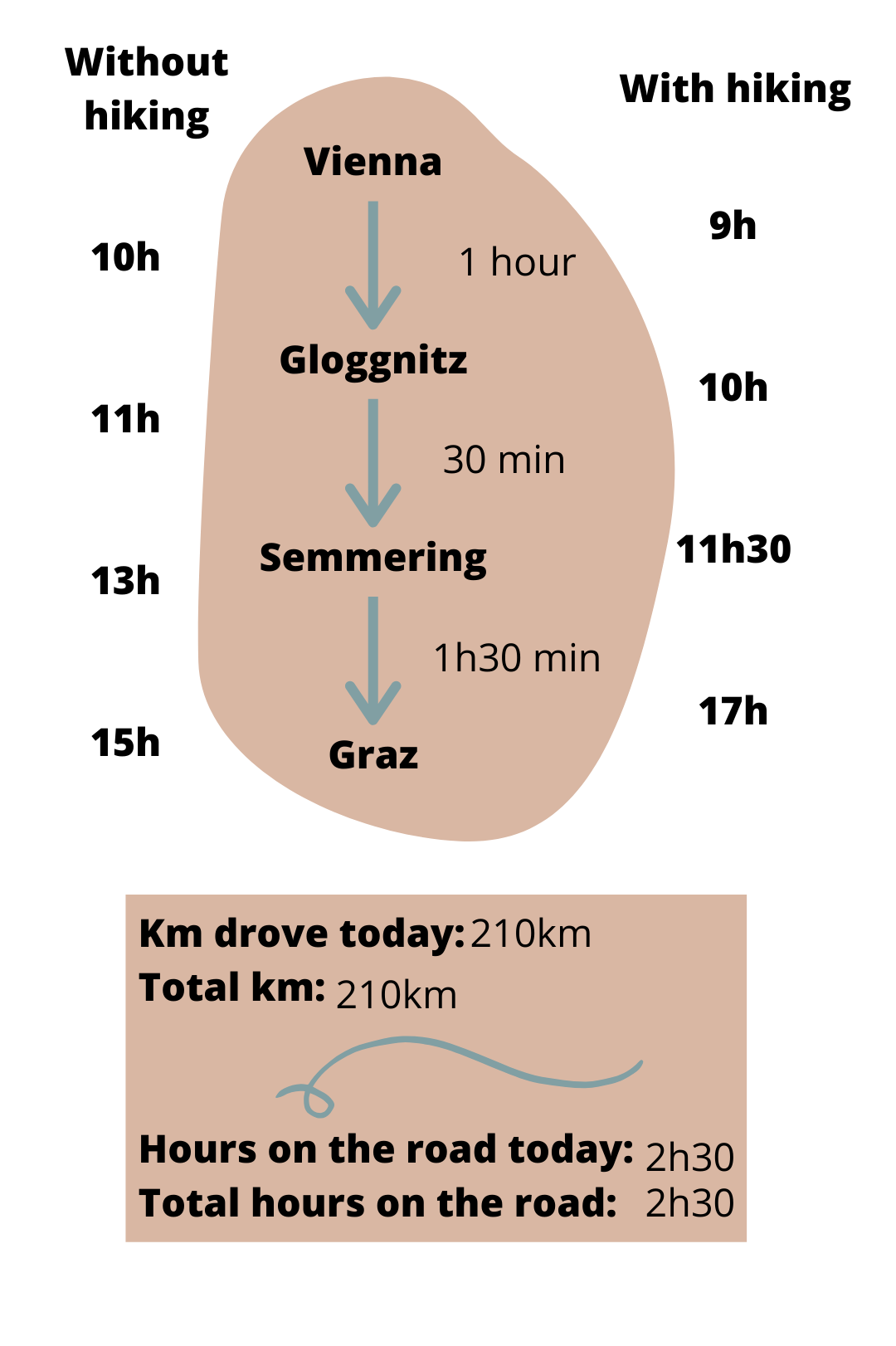
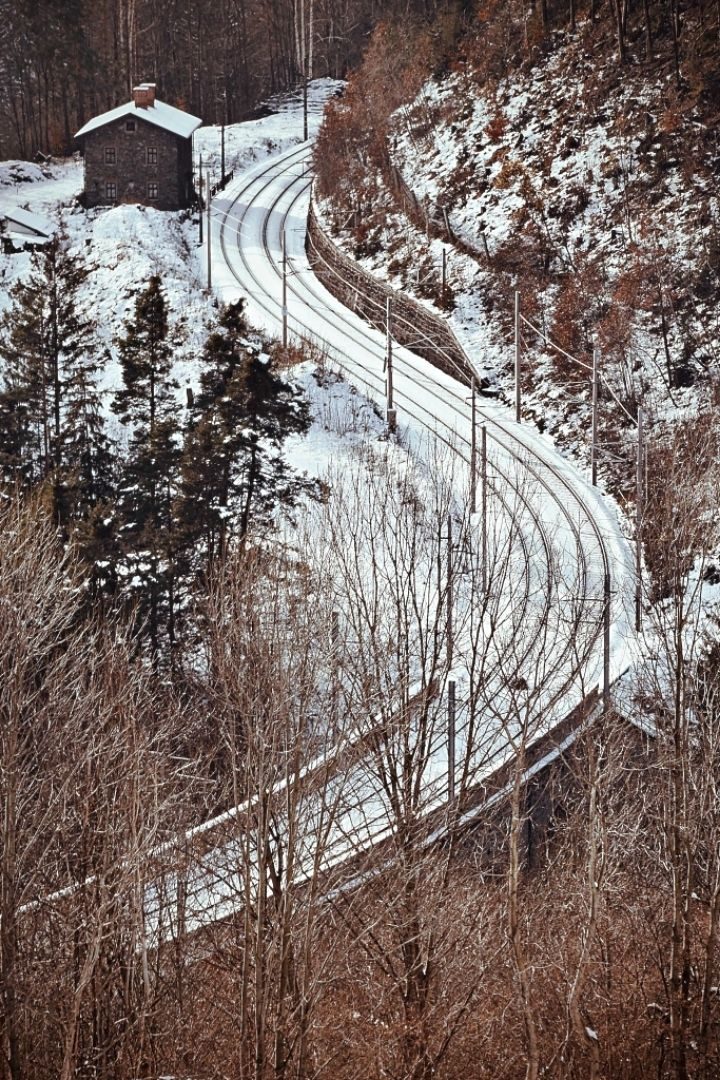
Gloggnitz is located near (15 min driving) Semmering, a town famous for its UNESCO World Heritage structure, the Semmering Railroad. This was the first mountain railroad in Europe, and its viaducts can be seen from the circulating area. In Semmering, you can also take several walks that include strategic viewpoints for the mountain and the railroad. In particular, The Railroad Trail (Bahnwanderweg) is a long medium difficulty trail that may take the entire day to complete but has impressive landscapes. You can get maps of these and other hikes in the tourist office for 1€. Semmering is also famous for its bike trails and ski slopes (in the winter) that you may want to try. There are some round hikes smaller than the Railroad Trail (that is not round, which may not be as useful for someone with a car parked somewhere) that can be a good option. Another option is to hike to one or two viewpoints and appreciate the view from there, which will take less time.
After this refreshing stop in nature, we’ll keep going in the direction of Graz. From Semmering to Graz, you’ll take the Semmering Schnellstraße and, in around 1 hour, you’ll be in Graz. Considering that you have been hiking for 4 or 5 hours, you’ll be in Graz at 16 or 17 o’clock.
Day 2 – Full day in Graz
Graz is the second bigger city in Austria and is located close to the Slovenia and Hungary borders. Graz is a university city that has several universities and thousands of students. Besides that, the historic centre of Graz is one of the UNESCO World Heritage Sites since 1999.
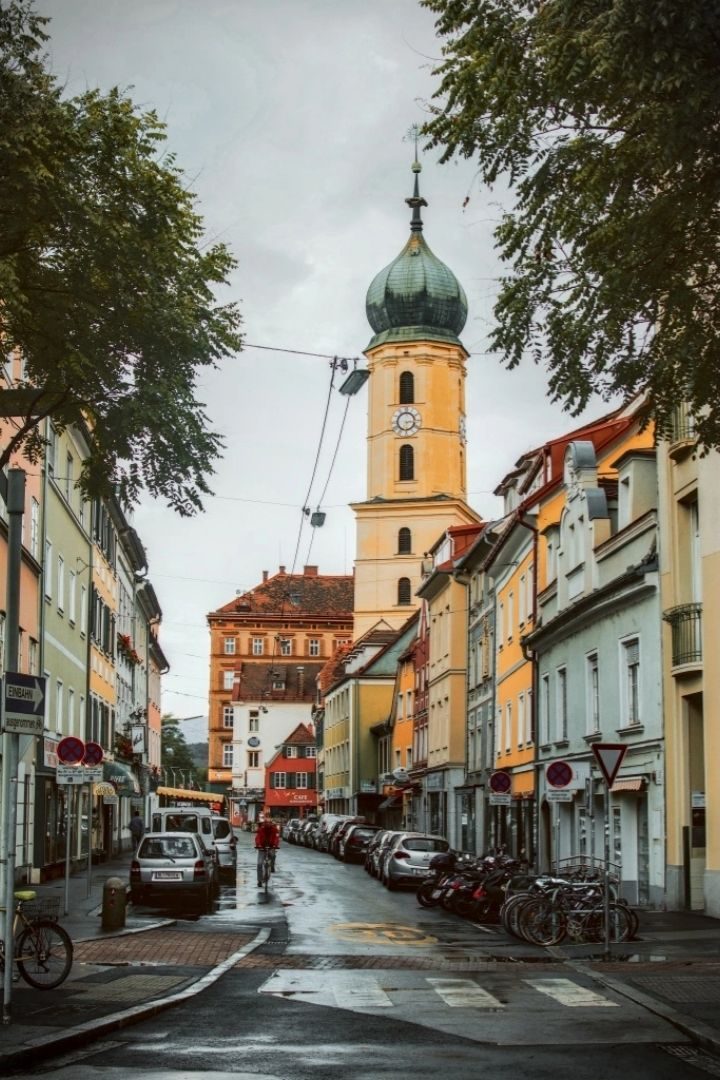
There you can wander through the streets and squares of the historic centre, appreciating the medieval architecture of the buildings, or you can join this private tour of the historic center. You can also climb to the Schlossberg, one of the most popular locations of the city, and there you can climb to the towers and experience the scenic views of the places in the Old Town where you wandered before.
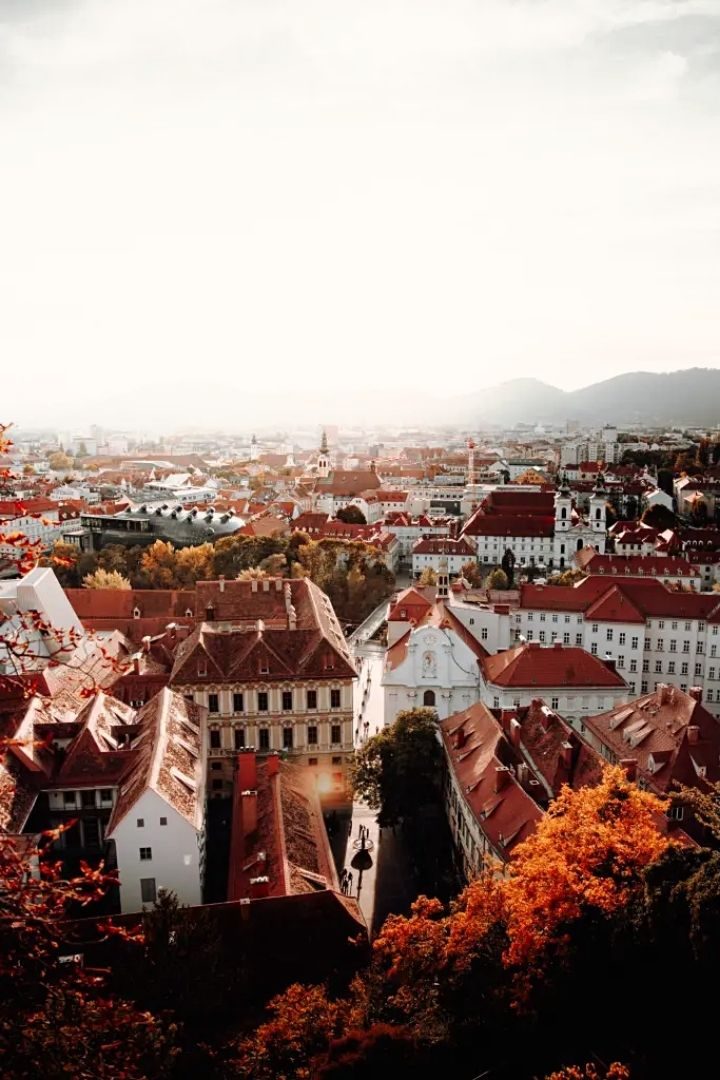
In Graz you can also watch the shows on the Glockenspiel, a clock that has daily shows at 11am, 3pm and 6pm, since you’ll get there later, you should do it at 6pm for a sunset show. This show consists of a wood couple dancing while the bells chime with a melody that may be contemporary or traditional.
There are many more places to visit in Graz, and if you haven’t hiked in Semmering, you can appreciate the city way more because you’ll get there earlier. You can also stay in Graz for more than one night and experience more of what the city has to offer.
Day 3 – Graz to Innsbruck with many stops along the way
After the previous day of city exploring, we’ll pack our bags again and hit the road towards Villach. This is a 2-hour trip that will pass through Wolfsberg and Klagenfurt. In these cities, you can also stop and wander the streets for a while. Wolfsberg has an 11th-century castle that rises above the town. You can also take a walk through the park of Wolfsberg Castle.
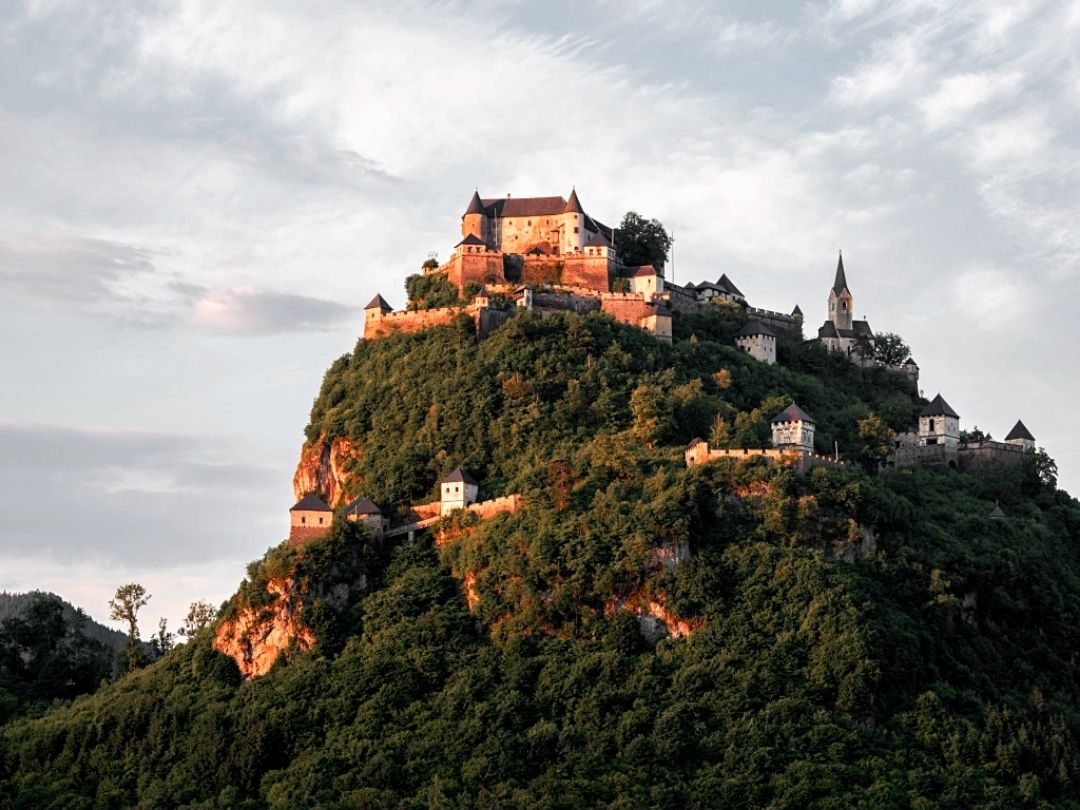
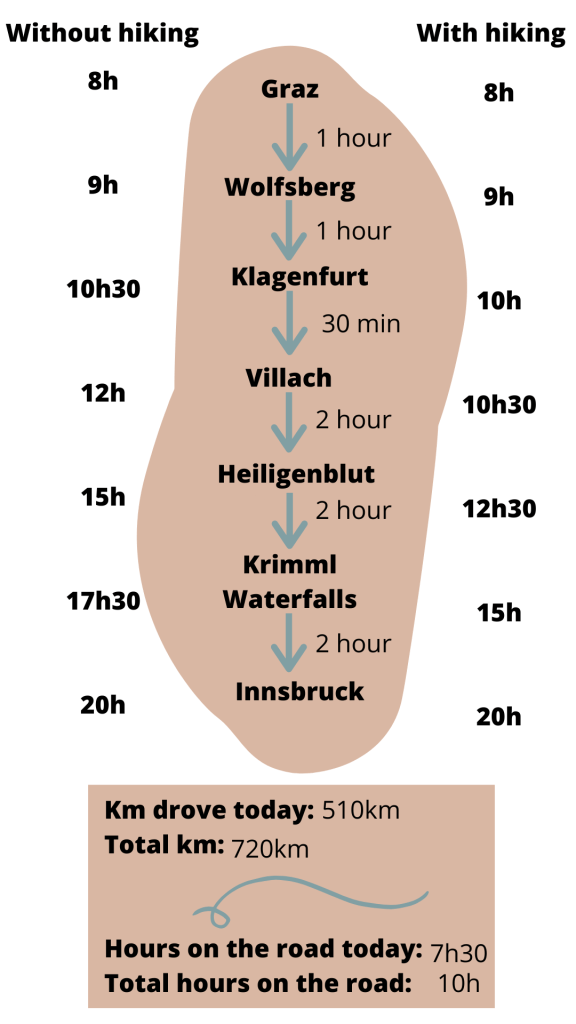
Klagenfurt is bigger than Wolfsberg and is the 6th biggest city in Austria. As a result, you probably will need more time to fully explore it. In Klagenfurt, you can also find a castle, the Hochosterwitz Castle, on top of a big rock and an old town ready for you to explore.
Villach is little town near the border between Austria and Italy. It is a town with a lot of history and culture. It has been almost completly destroyed by the allys in the WWII but quickly recovered. You can experience several festivals through the year such as the Carnival, street art festivals and also performances on the river. You can try plan your trip so that you can see one of them.
In Villach, you can stop for lunch and Villach is a little town near the border between Austria and Italy. It is a town with a lot of history and culture. It has been almost totally destroyed by the allies in WWII but quickly recovered. You can experience several festivals throughout the year, such as the Carnival, street art festivals, and performances on the river. You can try to plan your trip so that you can see one of them.
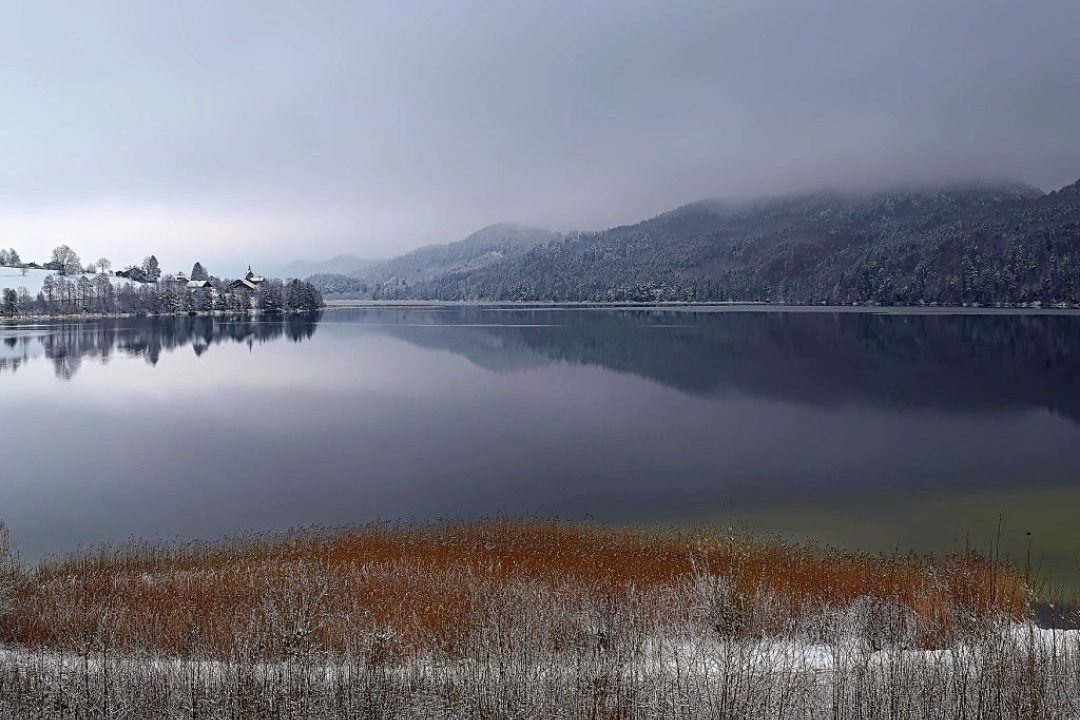
After this, we keep moving towards the Kirmml Waterfalls, through towns such as Lienz and Mittersill, where you can make a little pause. In this part of the trip, you’ll start to see more and more mountains everywhere, since you are approaching the more mountainous region of Austria. As a result, you can enjoy several hikes and explore picturesque lakes and landscapes. Because of this, you may want to spend more time in this part of the country.
On this road trip, I am suggesting you deviate from the main road, near Lienz, so that you can explore a little bit of Heiligenblut. Heiligenblut is located in a valley in the High Tauern range. Because of this location, you’ll experience scenic views all around this village. A particularly famous one is the view to St Vincent Church and Grossglockner massif, which is the highest point in Austria. This massif is also home to an 8km glacier, the Pasterze, 16 km away from Heiligenblut.
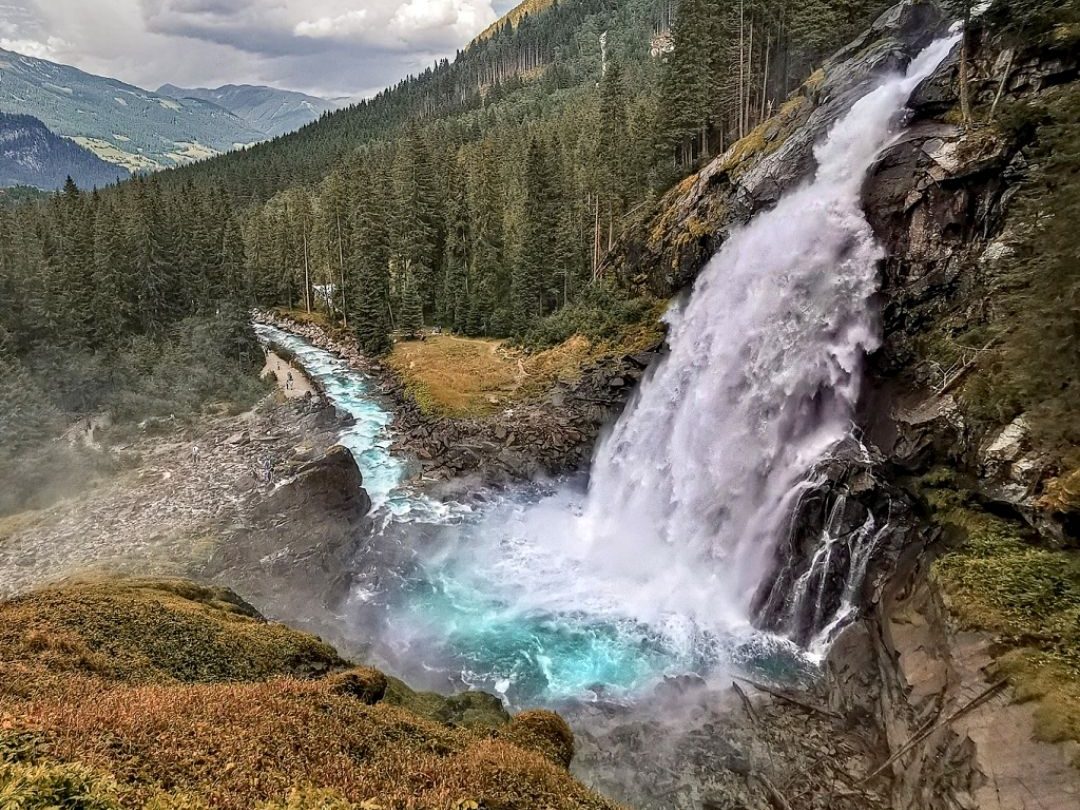
Another 2 hours away from Heiligenblut, you’ll find the Krimml Waterfalls. The Krimml Waterfalls are the highest ones in Austria, with 380m high. These waterfalls have several tiers and come from the glacier, which means that their flow can vary with the seasons, being at its highest in the Summer. To observe the waterfalls from several points, you can hike a 4km trail that has numerous platforms of observation. However, with just 10 or 15 minutes you can also reach the lowest waterfall. If you choose the first option you may want to skip some of the sugestions such as Wolfsberg, Klagenfurt and Villach so you can spend the time needed walking.
From Krimml Waterfalls, we head to Innsbruck. To get there, you’ll have a 1h30, 97km trip.
Day 4 – Full day in Innsbruck
Innsbruck is a famous winter destination because if its renown winter sports centre, having hosted several international winter competitions along the years.
Innsbruck as a lot to do, specially in its old-town. Innsbruck’s old town has buildings with over 500 years which means that the place is full of history. In the old town you can find buildings with a very particular architecture such as the Helblinghaus and narrow streets where you can walk and appreciate all the details of the buildings. You can also enjoy this food walking tour or, for the more adventurers 1-hour paragliding activity!

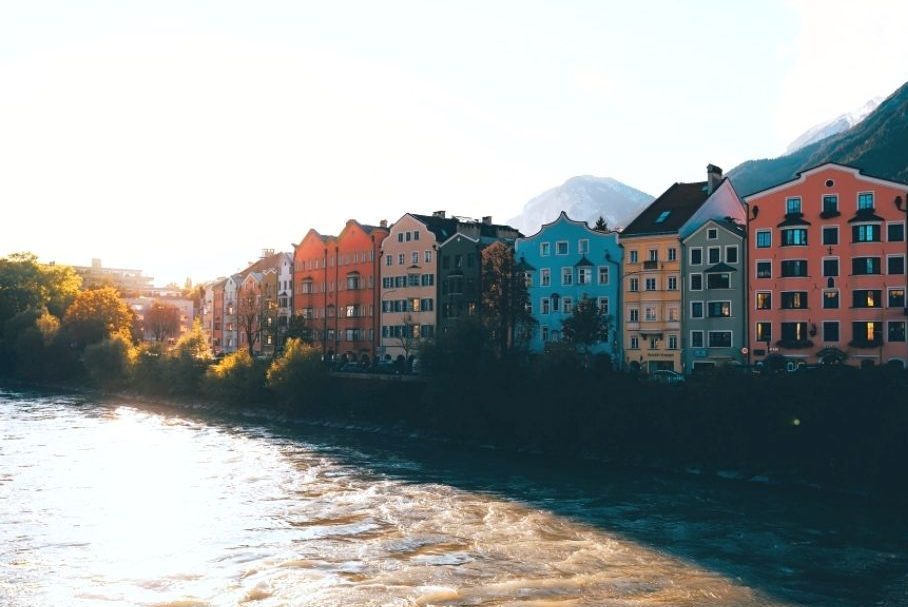
One of the most famous landmarks of Innsbruck is the colored houses by the river. These houses are located in the Mariahilfstraße and can be seen from the old town.
Another this that you can do in Innsbruck is to take the Nordkette Cable Car and appreciate the views from the mountains for a great panoramic view. This mountais is also a beautiful view from down beacuse it encoses the city from everywhere you look.
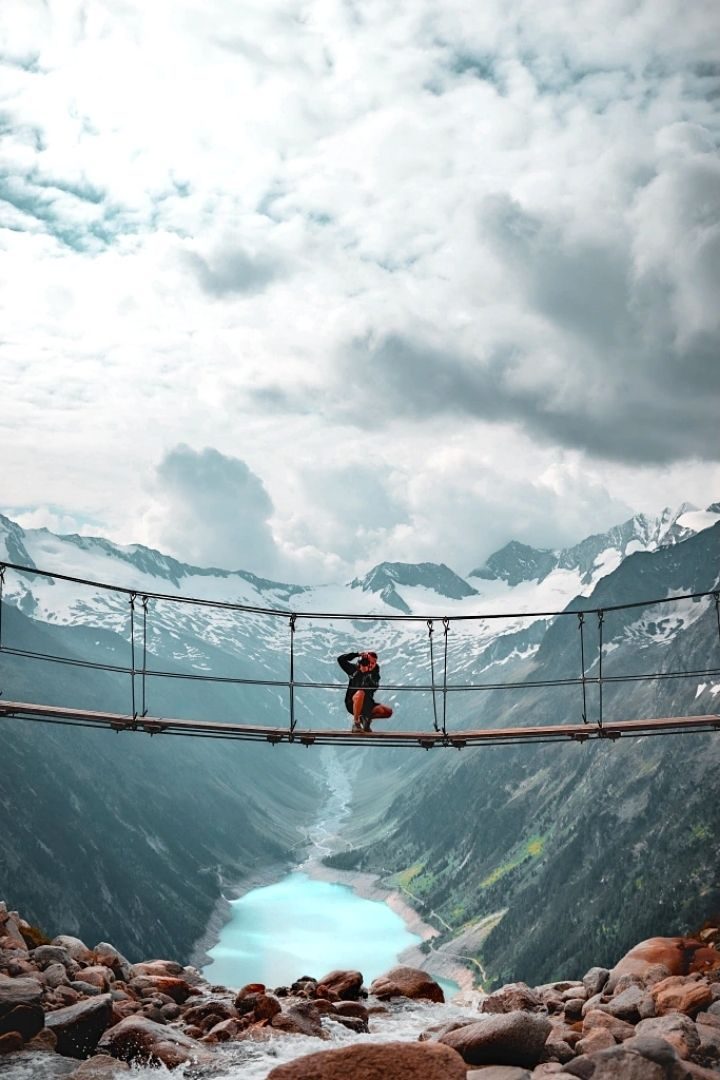
A couple of hours away from Innsbruck, you’ll also find the Olpererhütte hike that will get you to the epic Olpererhütte and its incredible scenery. This hike will take you around 3 hours (1h30 each way), surrounded by peaceful nature, mountains and lakes. It is important to stay hydrated during the hikes. Thus you may bring a thermic bottle, especially in colder months with warm drinks. You can also splurge in this bottle with UV filter.
Day 5 – Innsbruck to Salzburg
From Innsbruck, you can take the Inntal Highway to get to Alpbach. This will take you 45 minutes of your day on the road.
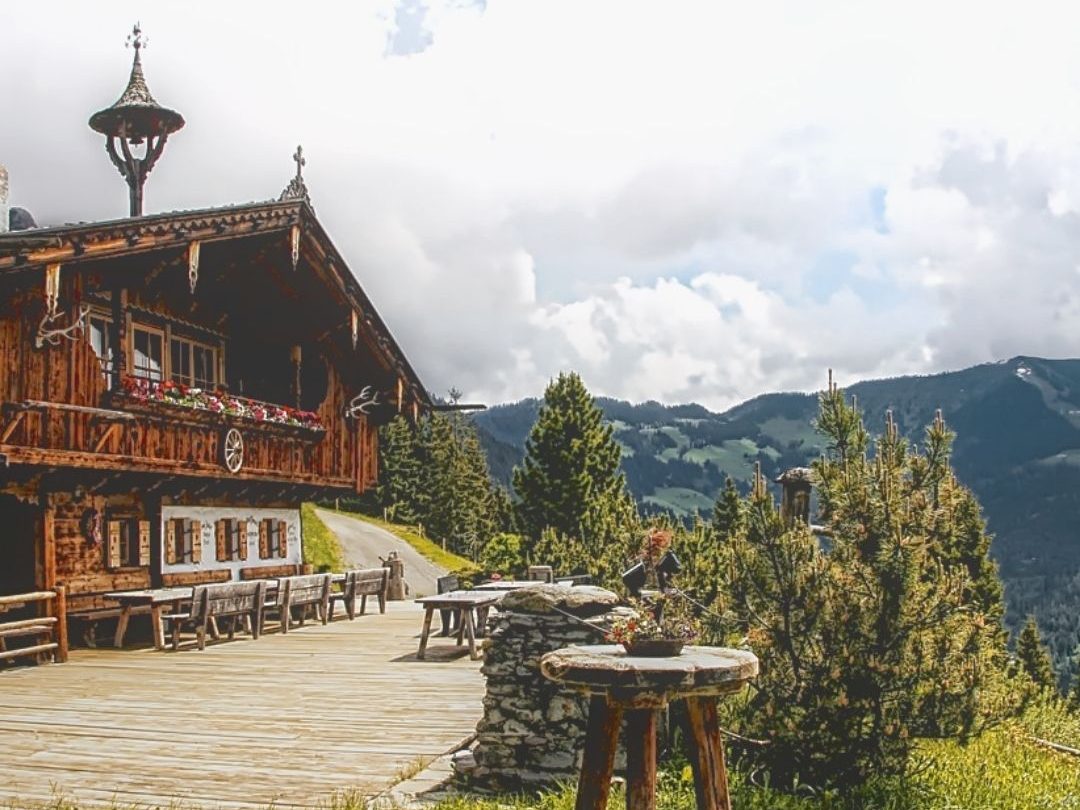
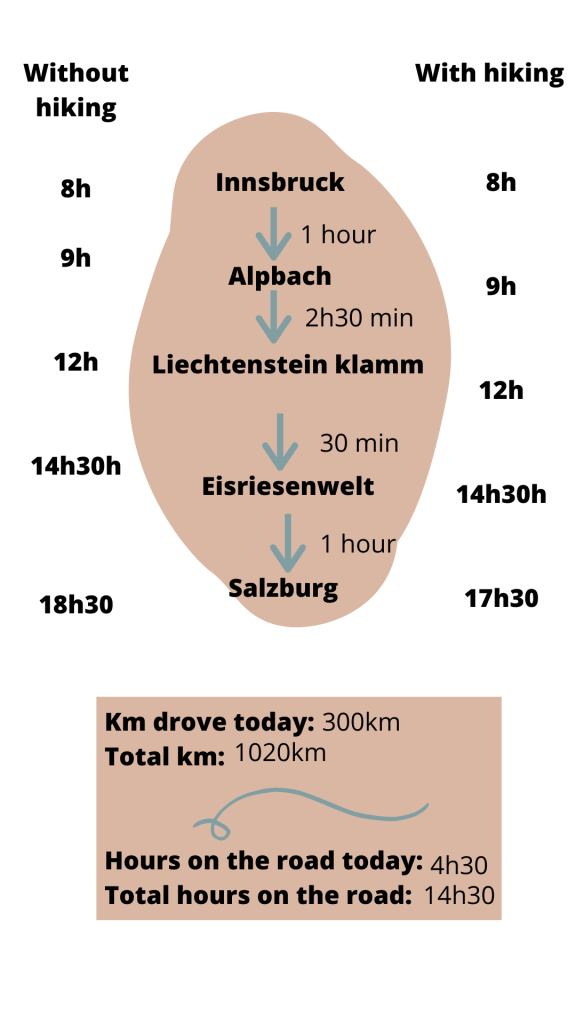
Alpbach is a little village in the middle of the greenery of the mountains. Here you’ll see typical wood houses scattered around the hills. This is why this village is considered, by many, as the most beautiful village in Austria.
From here, the fastest way to get to Salzburg is crossing the German border. Doing so will let you experience a little bit of the German state of Baviera, considered by many as the most beautiful one. This is a great way to see a tiny tiny bit of what this state has to offer. After the crossing of the border, you’ll drive really close to it for around 10 km. After that, we’ll keep driving towards Rosenheim, really close to the lake Chiemsee, and, after crossing the border once again, you’ll get to Salzburg.
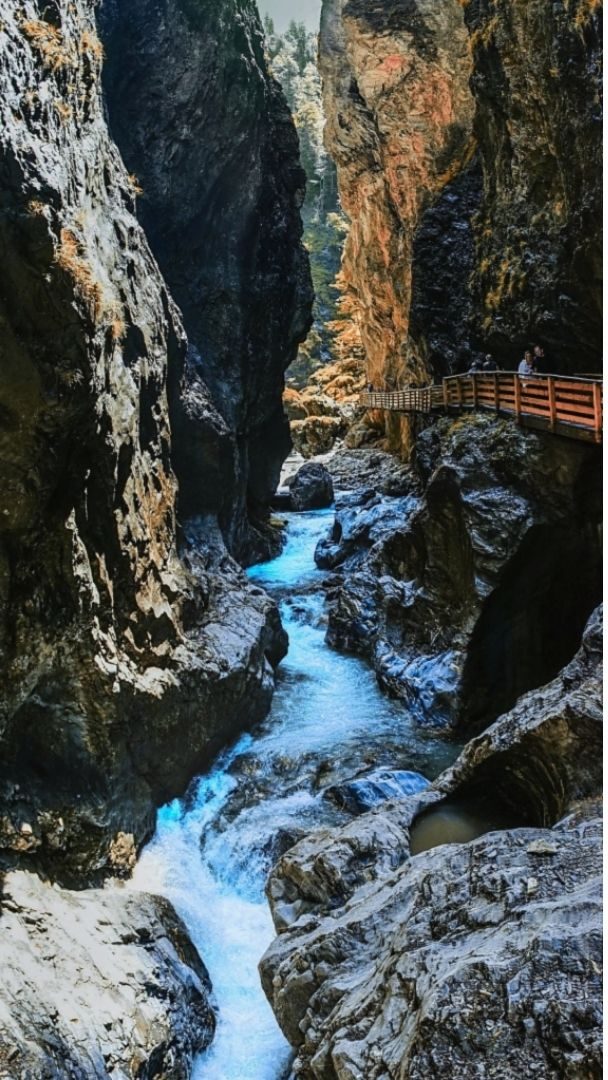
However, if you just cross the border and drive on the highway, you won’t experience some of Austria’s natural beauty. Thus, we will leave that road and head through route E641 towards the Lichtenstein Klamm. The Lichtenstein Klamm is a narrow gorge with wooden walkways and a spiral staircase. This activity is free if you have the SalzburgerLand Card. Otherwise, you’ll have to pay 10€.
After this, we drive for 25km to get to Eisriesenwelt. This is a beautiful and huge cave (40km) full of natural ice sculptures. To get to the cave, you can either hike or just take a cable car. As in 2021, you can pay 33€ to visit the cave and ride the cable car, or 16€ to enter the cave after hiking. You can also pay 20€ and just take the cable car, without the cave tour. Pay attention to the last entry of the day since it may be earlier than expected, which will mean that you’ll have less time than expected to explore, for example the Lichtenstein Klamm, so you may consider change this order.
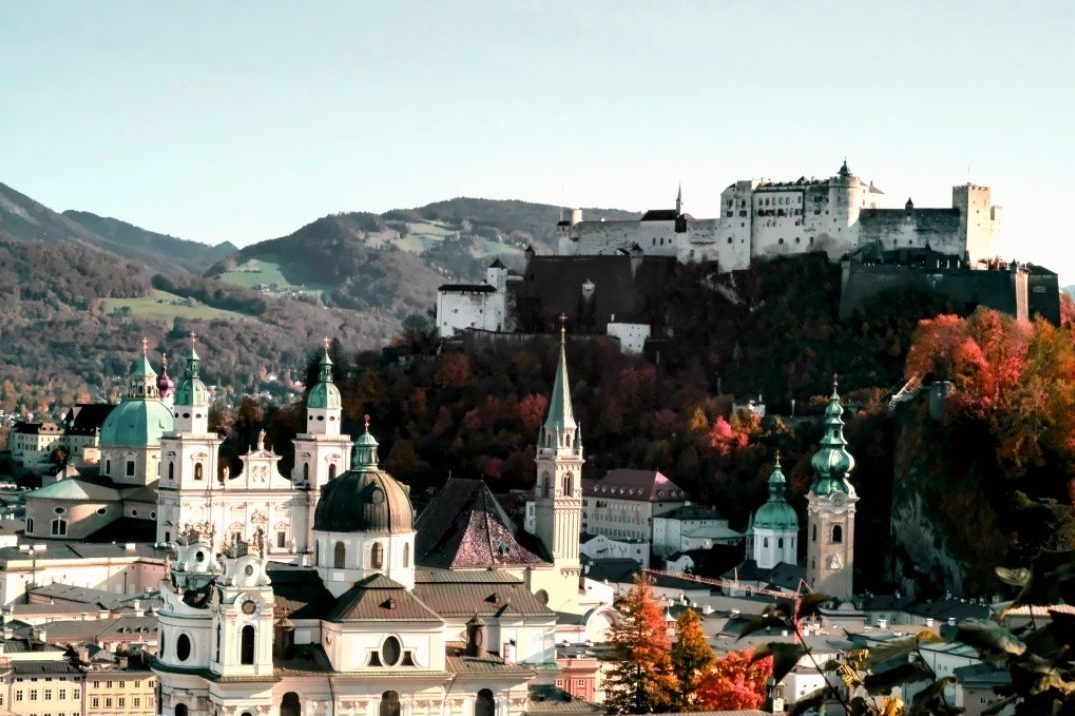
After this beautiful stop, you’ll get to Salzburg in less than 1h. Salzburg is the city of Music, home to Mozart, and highlighted in the Oscar-winning movie Sound of Music. The city old-town is one of the UNESCO World Heritage Site since 1996. There you can explore the Hohensalzburg Castle, St. Peter’s Abbey and many palaces such as the Hellbrunn Castle/Palace and the Mirabell Palace. Make sure to participate on a free walking tour to get to know the history of the city!
Day 6 – Salzburg to Hallstatt
Today will be a special day because we’ll get from Salzburg, a beautiful city, to another wonderful city, Hallstatt. You can start the day by exploring a bit of Salzburg. You may also decide to stay there for another day since it has so much to offer. After this, we have two options, either we are avid mountain climbers, used to hike in Via Ferratas, or we are not. In the first case, we will try to conquer the Donnerkogel Klettersteig. In the second case, we won’t risk it and head our way to Schafberg.
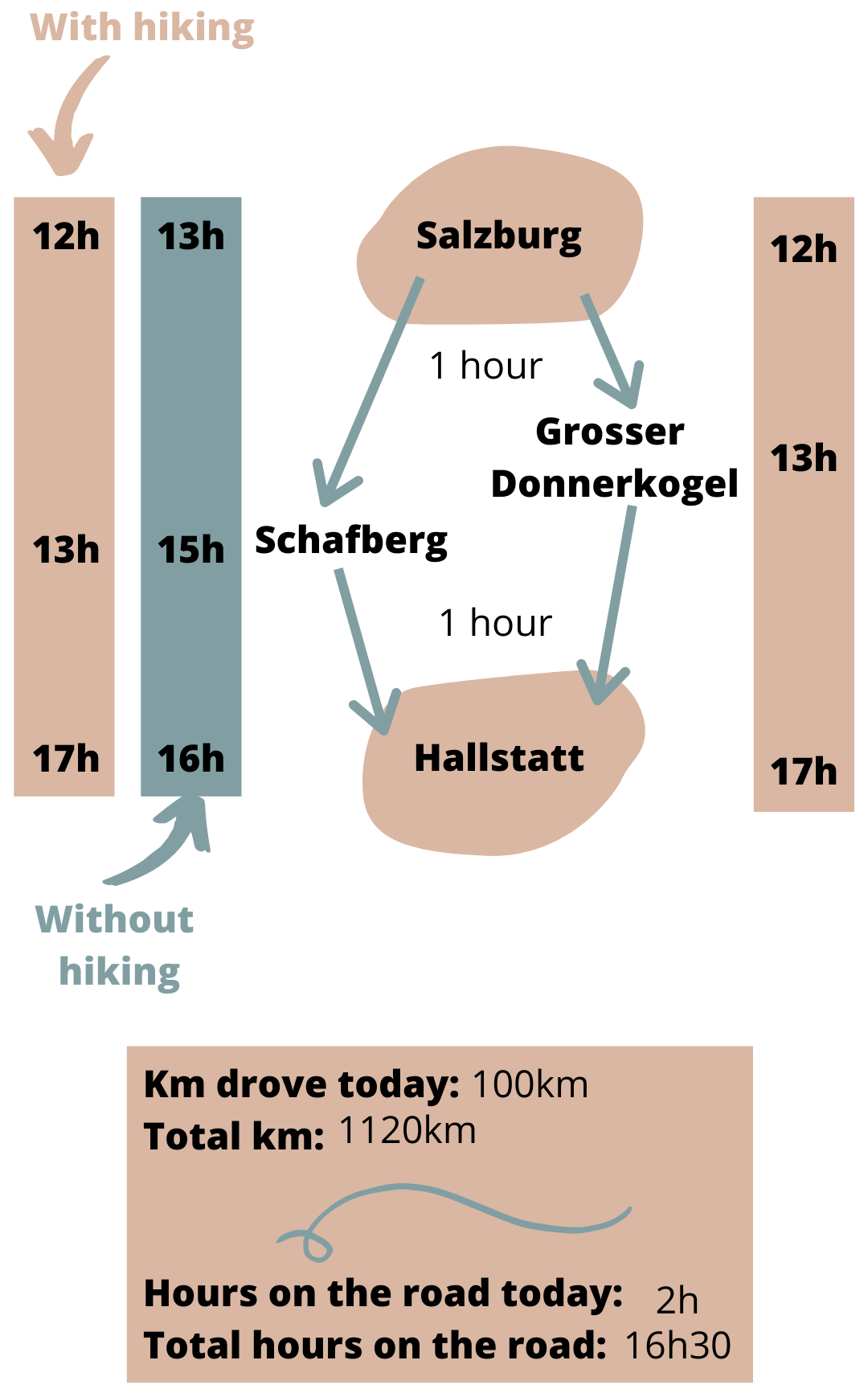
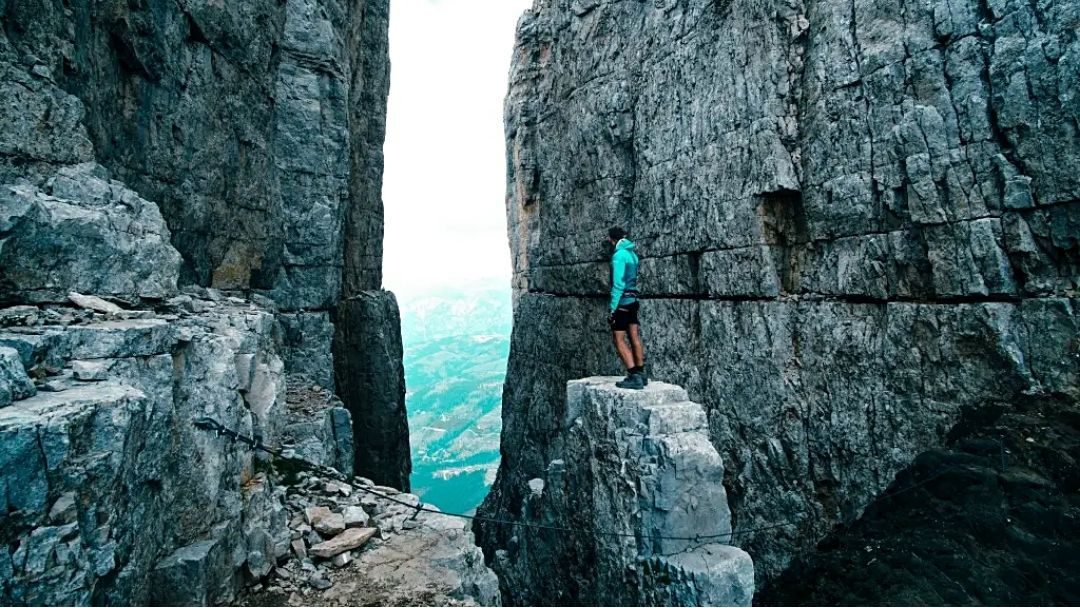
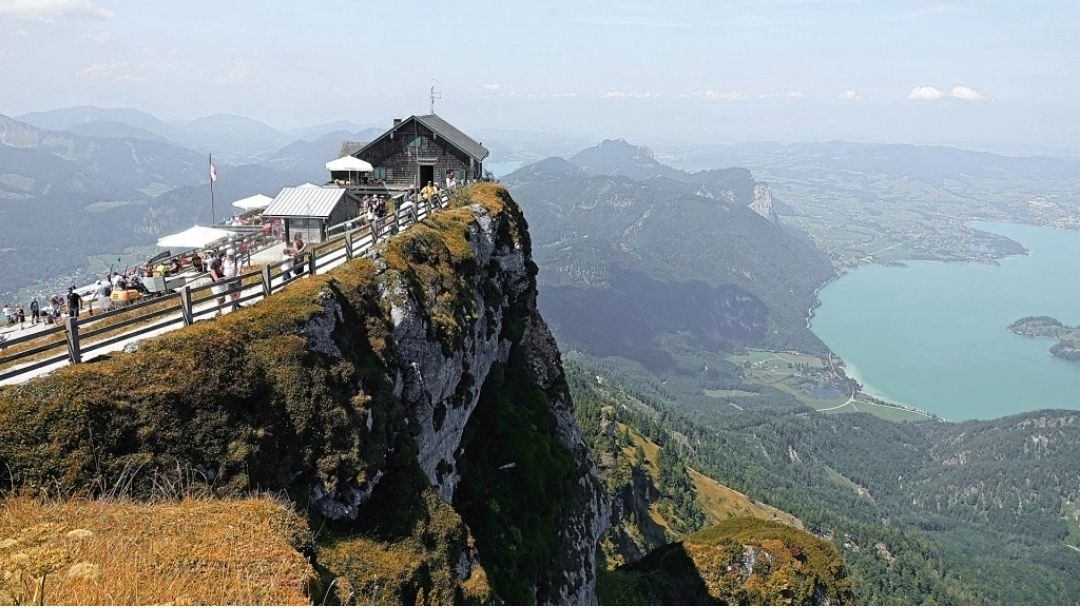
After a 50 min drive from Salzburg, you can get to the Donnerkogel Klettersteig. This is a hard hike, classified as class C/D Via Ferrata so, if you are not used and ready to climb it, you probably should skip it.
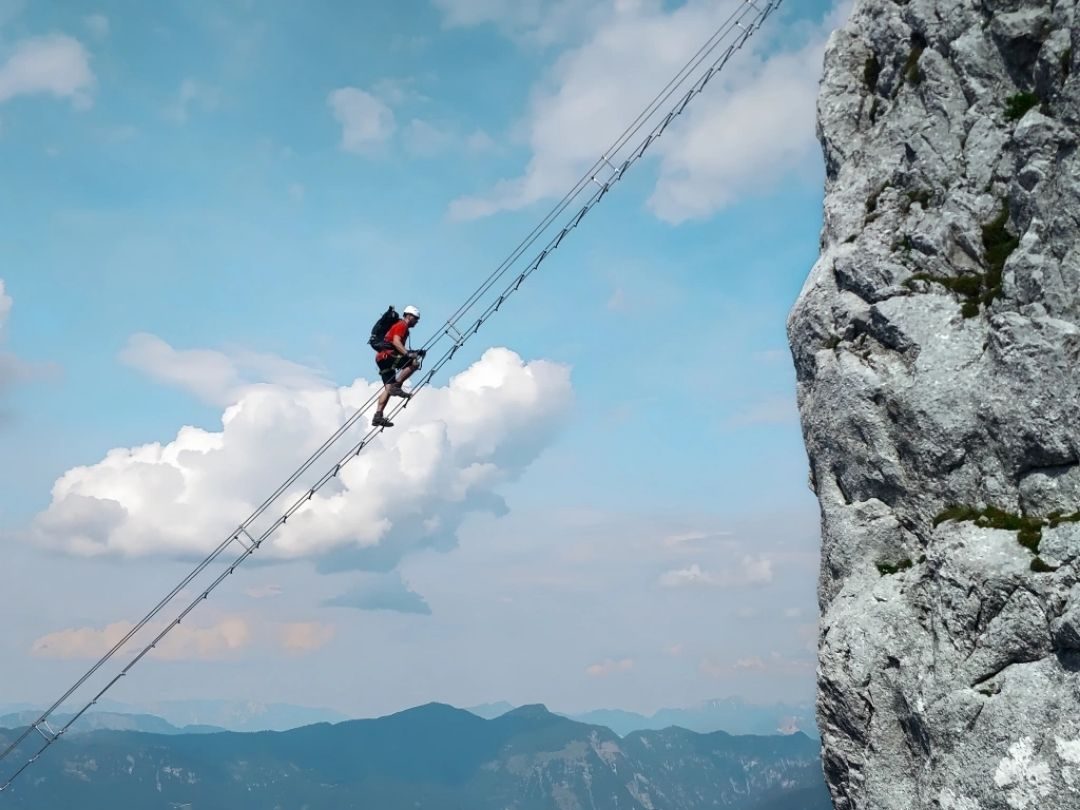
If you, however, chose to hike and climb this trail is a 3 hour long Via Ferrata, you will get to the iconic Ladder to Heaven. This a 40m long ladder that connects the Kleiner Donnerkogel to the Grosser Donnerkogel. Just remember that you’ll need some equipment to hike this trail, such as a climbing harness, Via Ferrata lanyard with two carabiners, gloves and helmet, that you can rent in Austria if you don’t want to travel with it. After this very tiresome adventure, you can go down the trail back to the Gablonzer Hutte, the beginning of the trail, which is a way easier part of the trail.
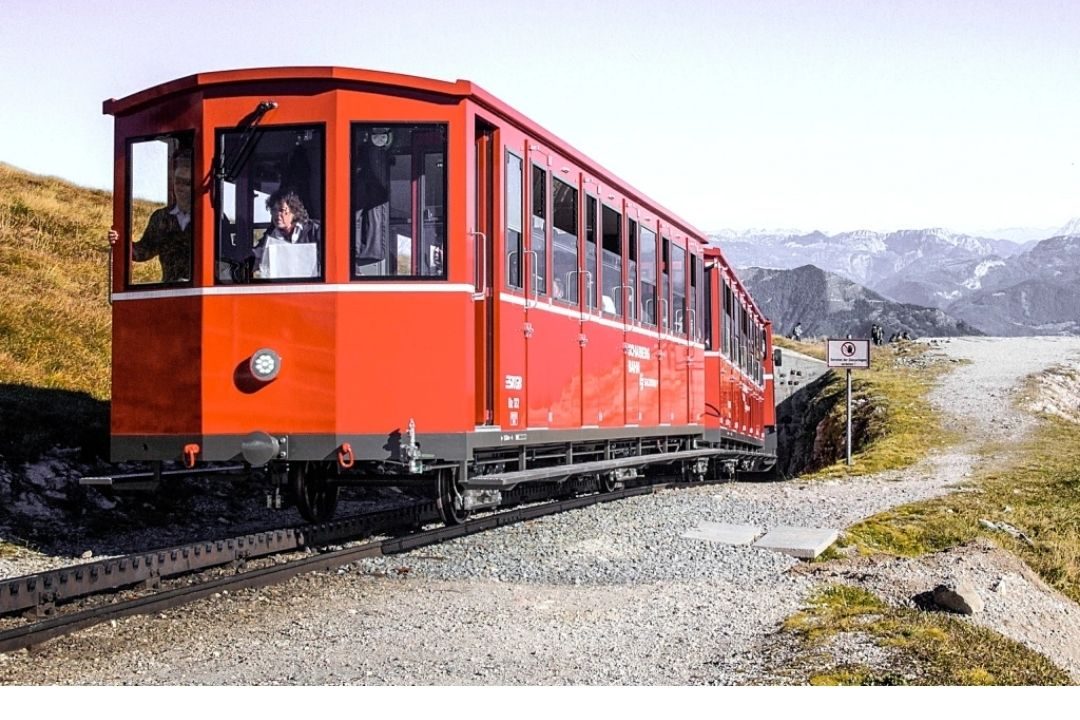
If you don’t want to risk climbing the Austrian mountains, you can also hike or take a train to the stunning Schafberg. Schafberg is around 1 hour away from Salzburg, and you can pick one of at least three hikes: From St. Gilgen up the Schafberg, From St. Wolfgang via Mönichsee and Purtschellersteig to the Schafberg and From St. Wolfgang via the Dorneralm to the Schafberg. You can also pay around 30€ to ride the train one way or 42€ both ways. This train is Austria’s steepest cog railway and will get you to Schafberg with little effort (and quicker).
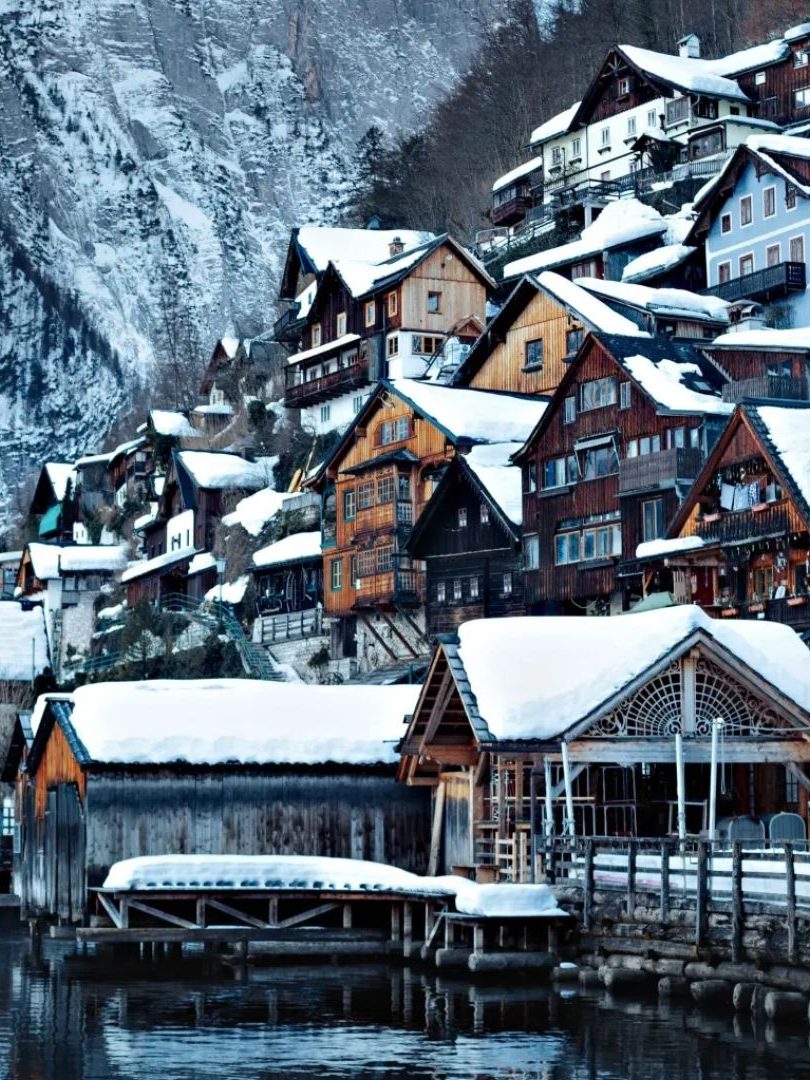
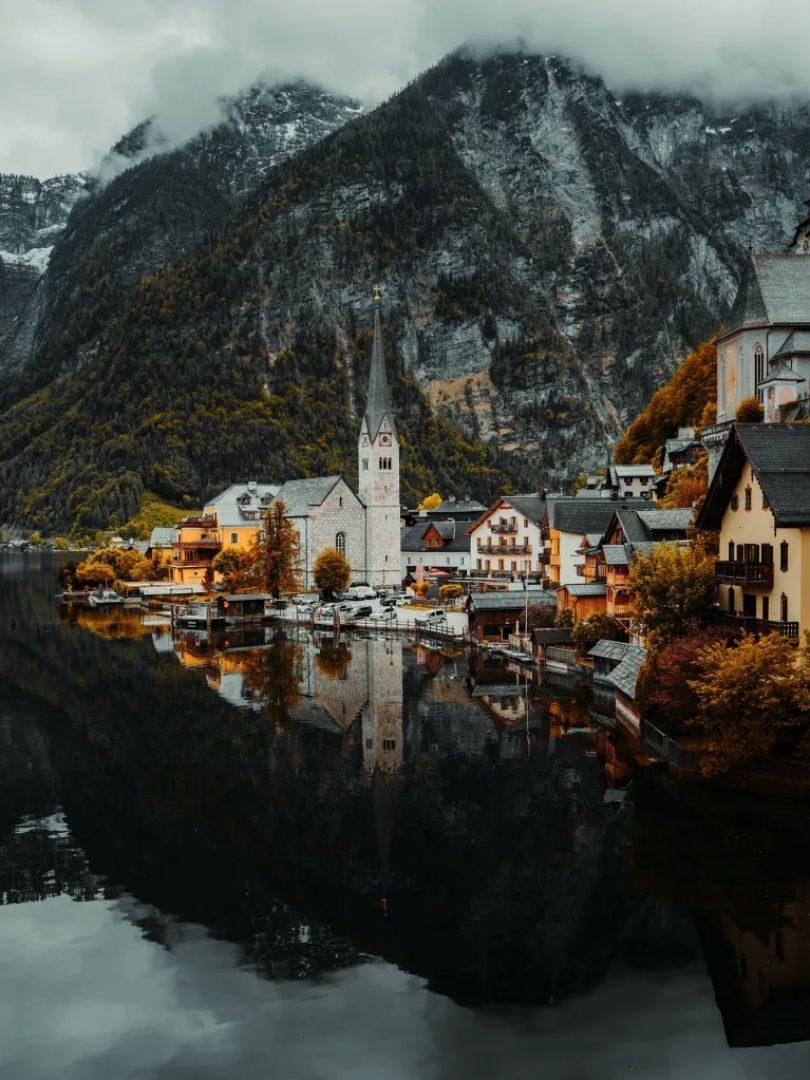
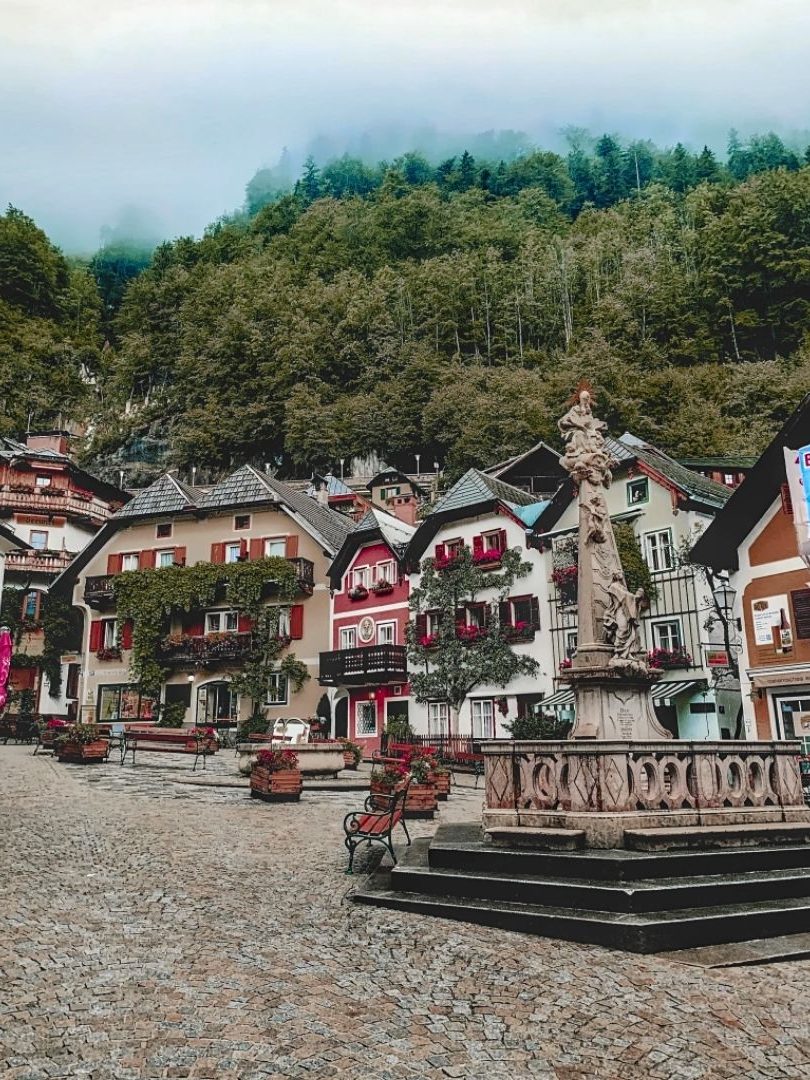
The next stop of your Austrian road trip is Hallstatt. You can get there after another hour from Schafberg or less than that from Donnerkogel Klettersteig. When you get to Hallstatt, you’ll be able to see the lake where the town is located, and you’ll drive alongside it until you start to see the houses of the town appearing. Once you are in Hallstatt, you’ll be able to explore the beautiful little alleys and the postcard-like views of the city and the mountains.
Day 7 – Hallstatt to Vienna
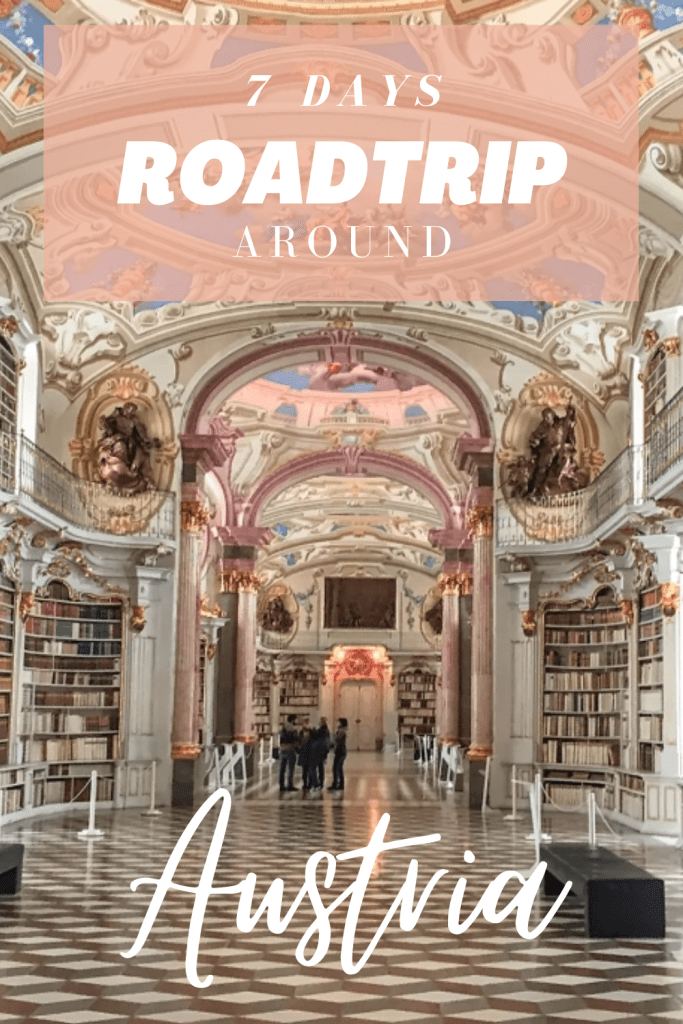
From Hallstatt, we’ll go back to Vienna, which means that this will be our last day of the road trip. From Hallstatt, we’ll make a 1h trip to Admont, with the objective of experience one of the most beautiful Libraries in the world, the Admont Abbey Library.
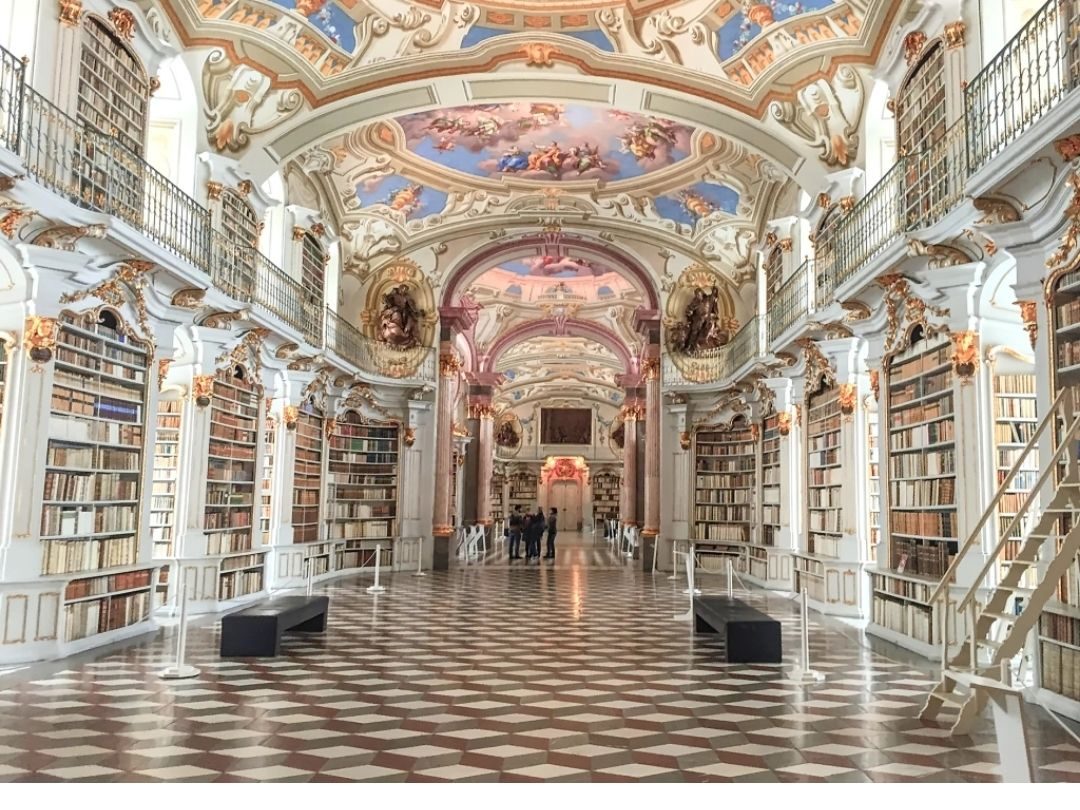
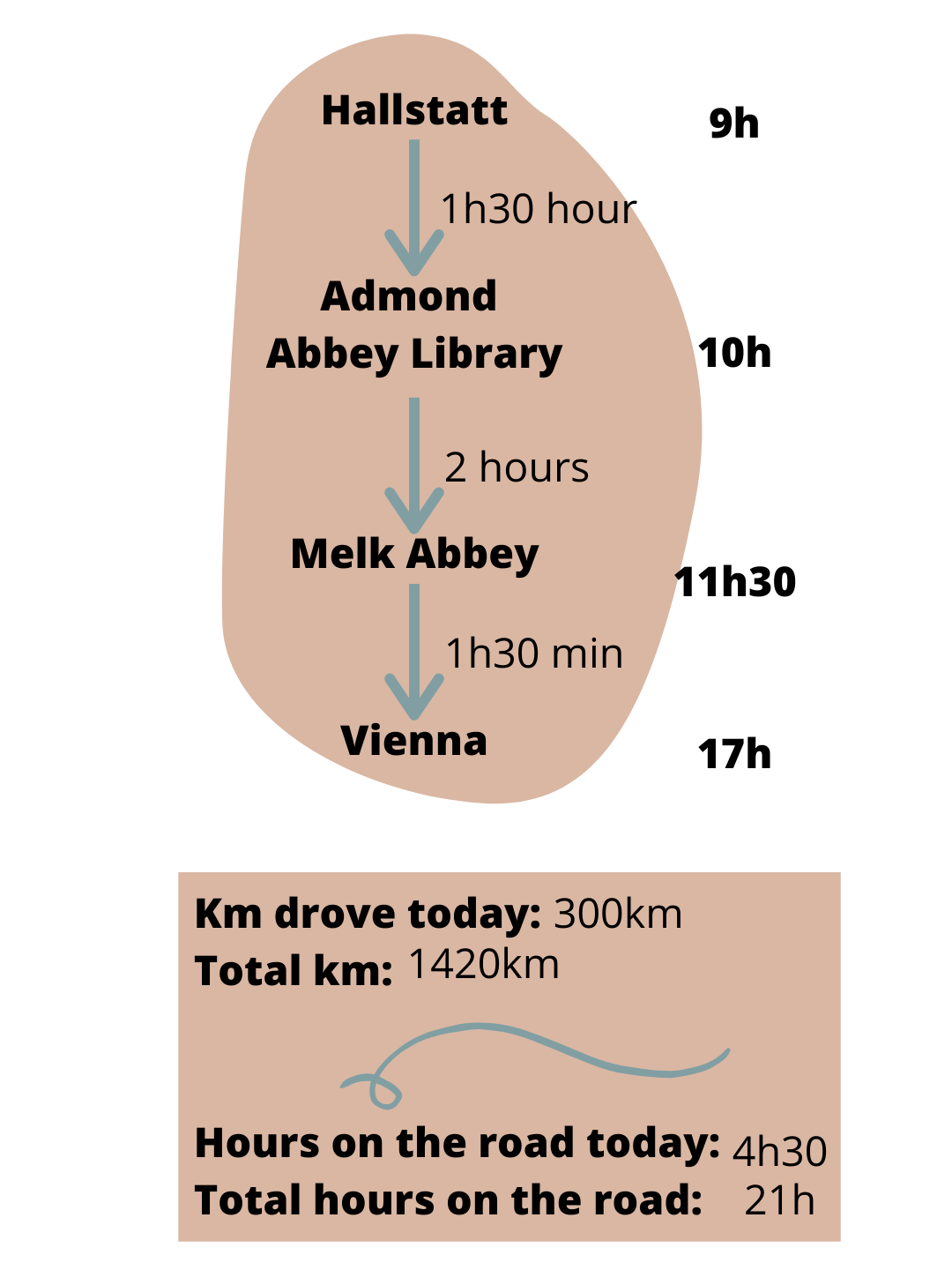
This library is the world’s largest abbey library, and you can visit it for less than 13€. This price also includes a 40min guided tour so that you can find all the library secrets and stories.
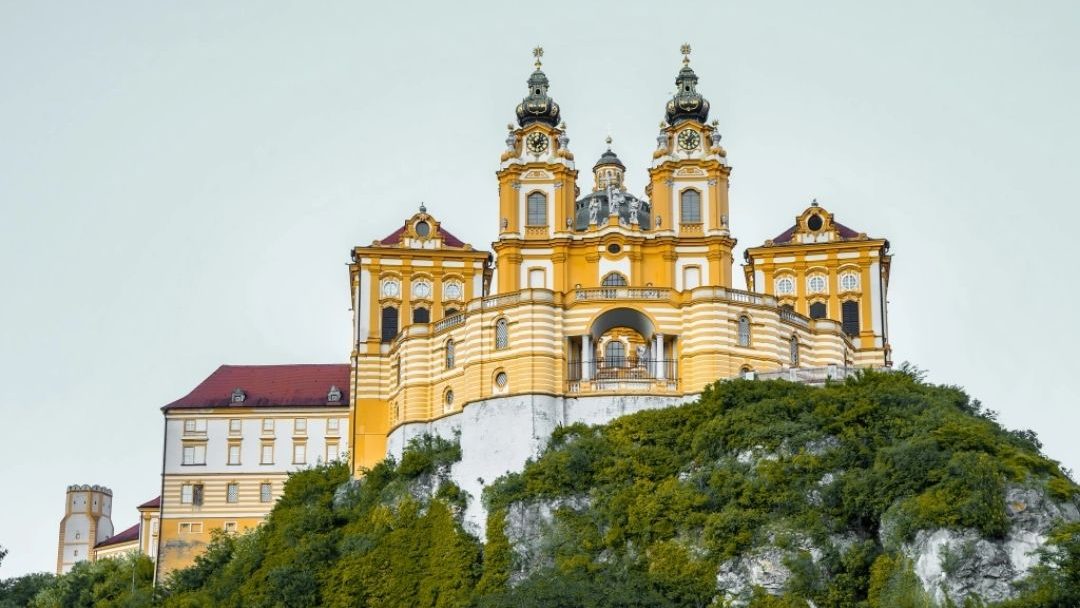
After that, the next stop is in the Melk Abbey, 130km away from the Admont Abbey Library. This abbey is huge, a baroque building on top of a hill above the town of Melk. This building, with all the glory that you see today, was built between 1702 and 1736 and is a UNESCO world cultural heritage site. Inside, you can visit the inside of the building with or without a guided tour, for 16€ and 13€.
After this stop, we’ll end our time in Austria, back in Vienna where everything started, and you can take your plane back home or spend a couple more days in the city if you are not yet ready to leave the country. Between Melk and Vienna, you will pass near St. Pölten and recharge a bit for your next road trip to Vienna. In VIenna you can try a chocolate workshop or experience an amazing Mozart concert at the Golden Hall
This road trip is also highly dependent on the weather, which isn’t always reliable in Austria, especially in the mountains. This means that you may want to spend a couple more days driving around Austria so that you have more time to deal with bad weather and setbacks.
In case you missed it, you can rent your car here!
Would you consider following this itinerary? What do you think about the chosen landmarks? Would you recommend other ones? Why?
In case you are wondering, all these pictures were taking with the following equipment:
- Canon EOS 90d
- Samsung SD card
- Canon EF 50mm F1.8 STM
- Canon EF-S 55-250mm F/4-5.6 is STM
- Canon EF-S 10-18mm F/4.5-5.6 IS STM
- K&F Concept K-Serie 67mm ND Filter
- Samsung Galaxy A52 5G
Pin it for later
Latest from the Blog
Rainbow Mountain in Peru: How to Prepare for This Epic Hike
Learn how to prepare for the Rainbow Mountain hike in Peru. From altitude tips and gear to trail insights, discover how to fully enjoy this breathtaking Andean adventure.
The Sacred Valley of the Incas: Ollantaytambo, Moray & More
A short way from Cusco you’ll find what is known as the Sacred Valley. When driving through this region, you’ll see beautiful snow-capped mountains, inca terraces, and ancient ruins – that some argue even more impressive than Machu Picchu. Typically, the Sacred Valley is just a stop on the way to Machu Picchu, but it…
Explore Paracas, Ballestas Islands & Huacachina in 2 Days – Coastal Peru Trip
Experience the best of Peru in just 2 days from Lima! Visit Paracas’ wildlife-filled cliffs, taste authentic Pisco at a vineyard, and get your adrenaline fix with dune buggy rides and sandboarding in the stunning Huacachina Oasis.
 MORNING BIRD TRAIL